Sense the surroundings
An LDR changes resistance as ambient light changes. A voltage divider turns that change into a readable signal.
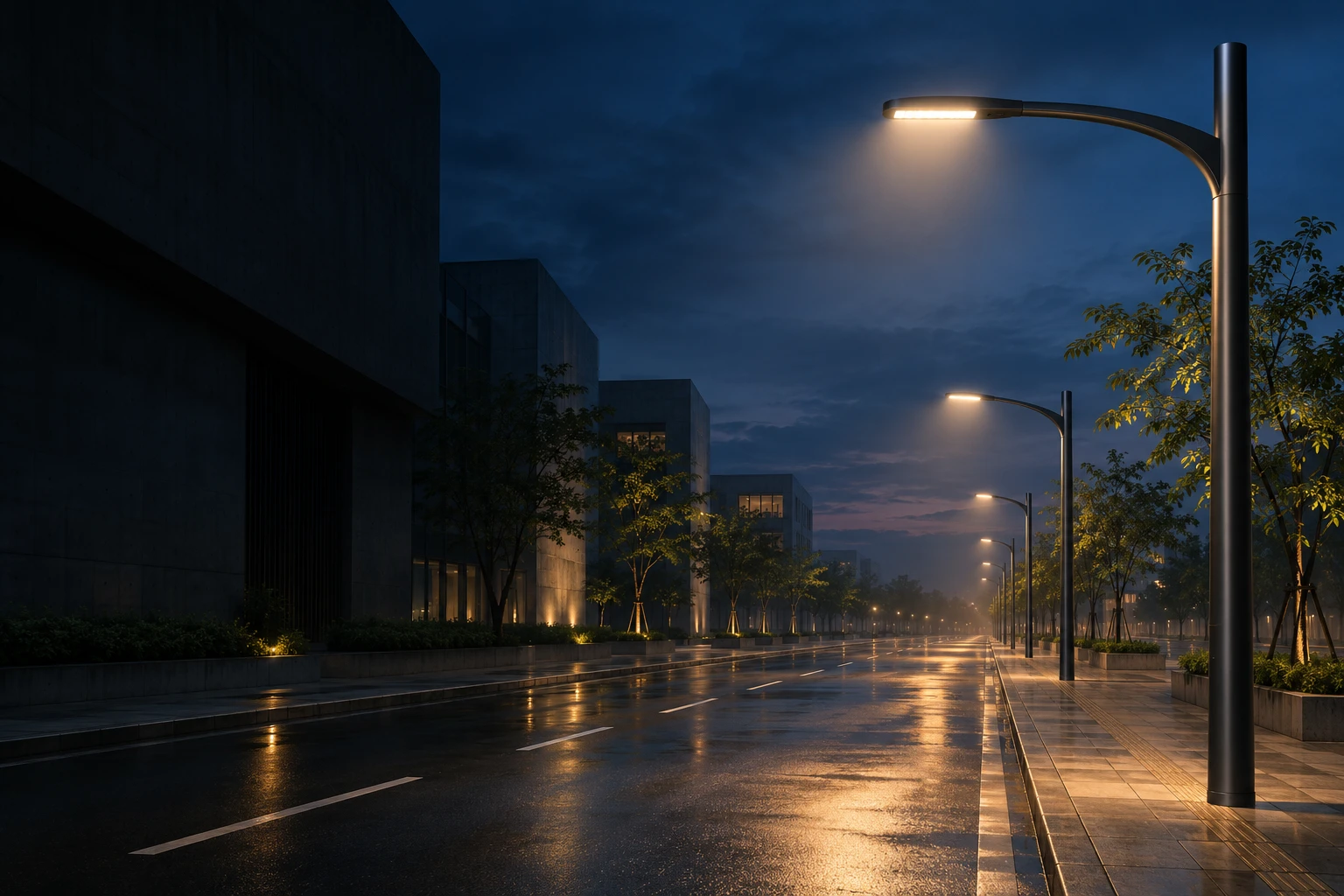
A street that knows when to shine.
Automatic illumination. Thoughtfully engineered.
Streetlights should respond to the world around them. Lumen explores a simple idea: sense the daylight, switch on as darkness falls, and switch off when the sun returns.
A project-based learning concept that brings light sensing, automatic control, and efficient illumination into one clear, working demonstration.
Move the daylight slider. Watch the streetlights respond automatically.
Illustrative browser simulation · no physical hardware connected. Auto switches off above 50 lux to prevent flicker near the threshold.
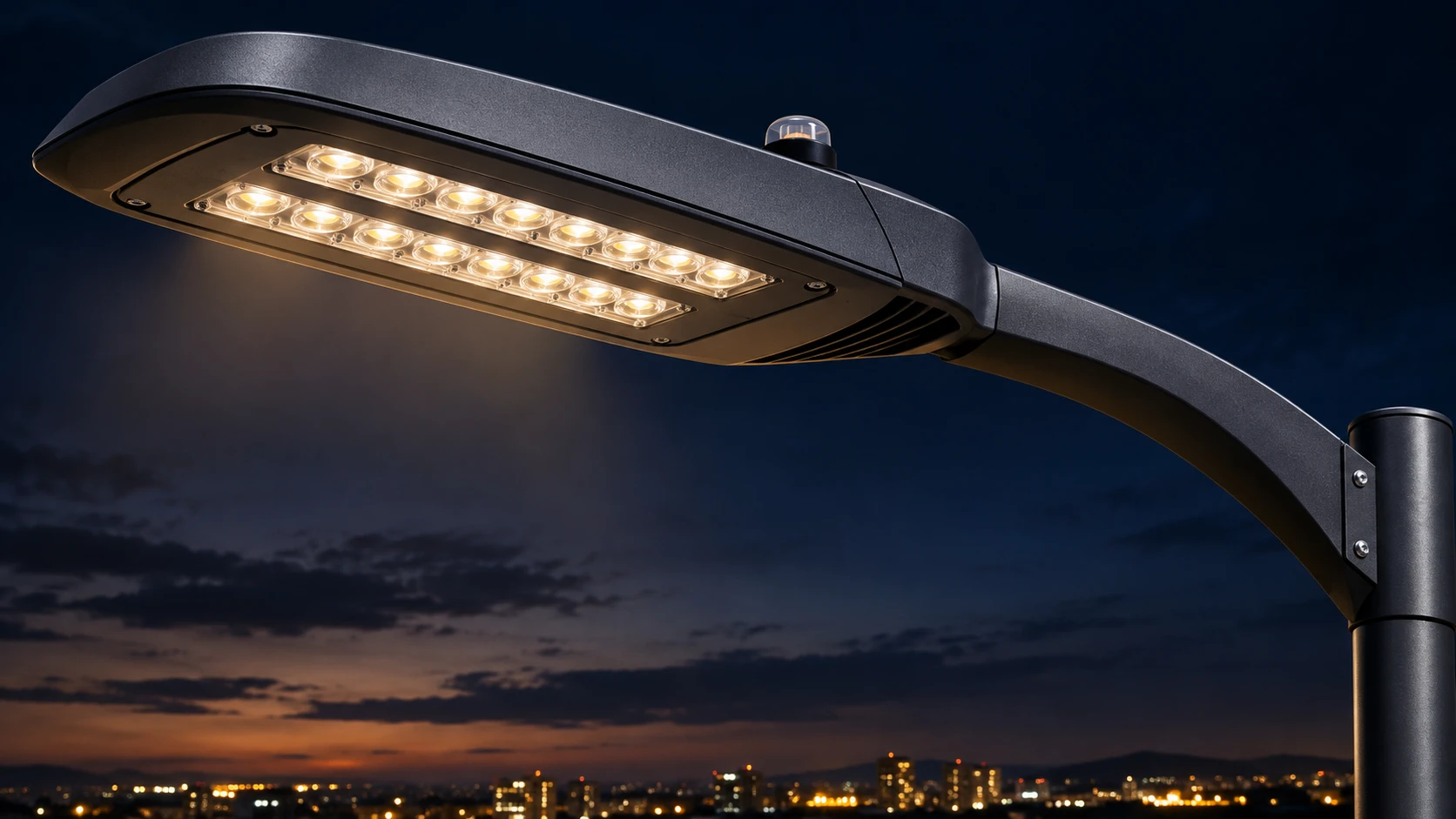 Concept visual · sensor-controlled LED luminaire
From a change in daylight to an illuminated road. Every stage has a job.
An LDR changes resistance as ambient light changes. A voltage divider turns that change into a readable signal.
The control circuit compares the light level with a threshold. Separate on and off thresholds help prevent rapid switching.
A switching stage controls the LED light. The light turns on after dusk and turns off as daylight returns.
Explore the proposed prototype, its operating sequence, and what this demonstration represents.
A typical low-voltage demonstration uses an LDR, resistor divider, a microcontroller or comparator, a transistor or relay switching stage, an LED streetlight model, and a suitable DC supply. The final component ratings depend on your physical build.
The simulated streetlights switch on below 30 lux and off above 50 lux. Between these values, the previous state is retained. This hysteresis stops small sensor fluctuations from causing the light to flicker.
Change ambient light, choose daylight/dusk/night, play a complete day–night cycle, or switch to manual control. Sensor and relay readouts update as you interact. All values are simulated in your browser.
Automatic control avoids relying on someone to switch lights each day and keeps them off when daylight is sufficient. Actual energy savings depend on the lamp rating, local daylight hours, and the system used for comparison.
Less wasted light.
More considered nights.